
Case Studies
SCALING PERSONALIZED OUTREACH WITH N8N:
FROM APOLLO TO AI-DRIVEN MESSAGING

The client:
In outbound sales, personalization and efficiency are key to starting conversations that actually lead somewhere. Manually researching and reaching out to prospects takes too much time, so we built a fully automated outreach system to solve this. The workflow begins with scraping targeted leads from Apollo using Apify, which gives us a strong foundation of potential contacts.
From there, the automation continues with a second step that gathers additional insights from Tavily and LinkedIn, checking each lead’s recent activity to uncover potential pain points and the best way to approach them. Finally, in the third stage, all of this collected data is used to generate highly personalized outreach messages that feel authentic and relevant to each individual.
This case study shows how we connected these parts into a seamless n8n pipeline that not only
saves hours of manual work but also creates outreach campaigns that stand out from generic
sales emails.
Results
The automation delivered measurable improvements across cost,
efficiency, and conversion:
- Reduction in manual research time, cutting hours of prospecting
down to minutes. - Lower operational costs, as tasks that previously required a
dedicated SDR can now be handled automatically. - Consistent lead quality, thanks to structured data capture and AI-
driven profiling. - Higher response rates compared to generic cold email campaigns,
as prospects receive messages that reflect their profile and context. - Faster experimentation, with easily editable prompts that allow rapid
testing of new outreach angles and strategies.
The Process
Defining Apollo Search Queries with the n8n Chat Interface
The process begins inside an n8n chat interface, which we use to give structured orders to
the automation. To make things simple and consistent, the chatbot comes with pre-
prompted orders that guide us through building Apollo search queries.
When starting a new search, we can quickly define parameters such as:
- Location of prospects
- Seniority level (e.g., manager, director, C-level)
- Company size
- Maximum number of records to pull
Because we plan to test different outreach approaches later, we intentionally keep the
batches smaller. If the chatbot detects that any part of the order is unclear, it automatically asks clarifying questions until all query fields are properly filled.
It’s important to note that keywords should be defined with Apollo’s search logic in mind.
The chatbot ultimately generates a direct Apollo search link, which is then saved into
Airtable.This link can also be opened directly in a browser at any time, making it easy to review the query results or refine the search manually if needed.
Once complete, the chatbot passes the structured search data into Airtable, which serves
as the backend for this project. Airtable was chosen because of its flexibility and
robustness, making it easy to store, manage, and update lead records as they move through the automation pipeline.
Part 1 : Defining Apollo Search Queries with the n8n Chat Interface
The process begins inside an n8n chat interface, which we use to give structured orders to the automation. To make things simple and consistent, the chatbot comes with pre-prompted orders that guide us through building Apollo search queries.
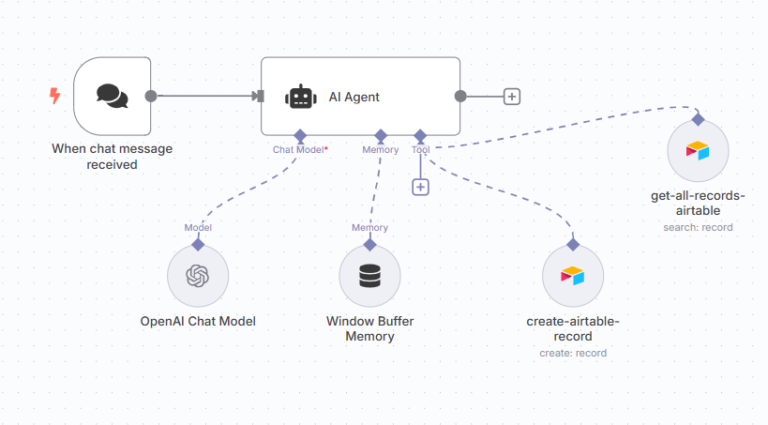
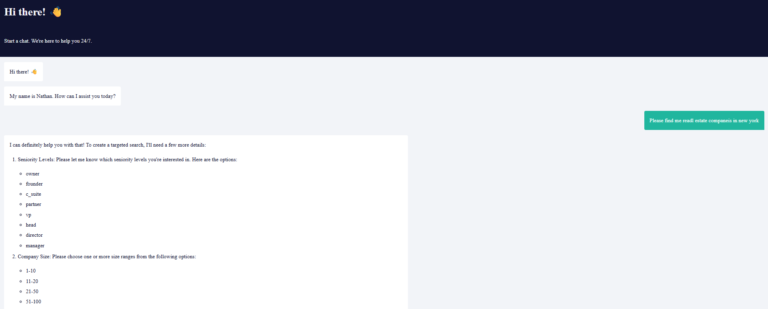
When starting a new search, we can quickly define parameters such as:
- Location of prospects
- Seniority level (e.g., manager, director, C-level)
- Company size
- Maximum number of records to pull
- Keywords.
Because we plan to test different outreach approaches later, we intentionally keep the batches
smaller. If the chatbot detects that any part of the order is unclear, it automatically asks clarifying questions until all query fields are properly filled.
It’s important to note that keywords should be defined with Apollo’s search logic in mind.The
chatbot ultimately generates a direct Apollo search link, which is then saved into Airtable.This
link can also be opened directly in a browser at any time, making it easy to review the query results or refine the search manually if needed.
Once complete, the chatbot passes the structured search data into Airtable, which serves as the
backend for this project. Airtable was chosen because of its flexibility and robustness, making it easy to store, manage, and update lead records as they move through the automation pipeline.
Part 2: Scraping and Preparing Lead Data
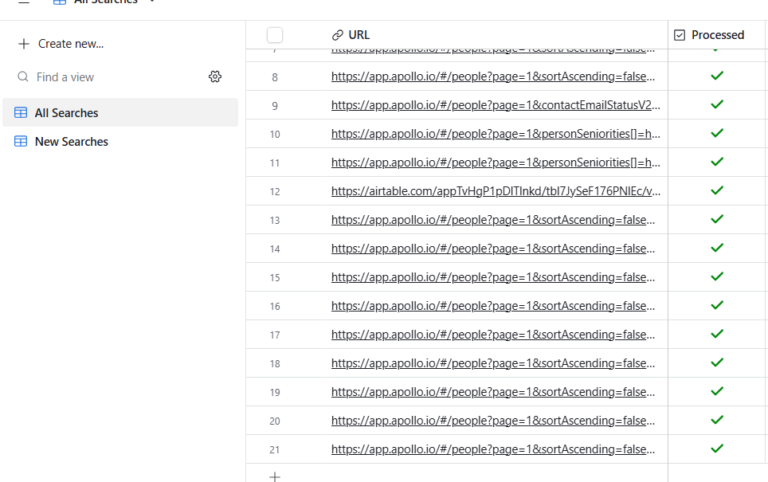
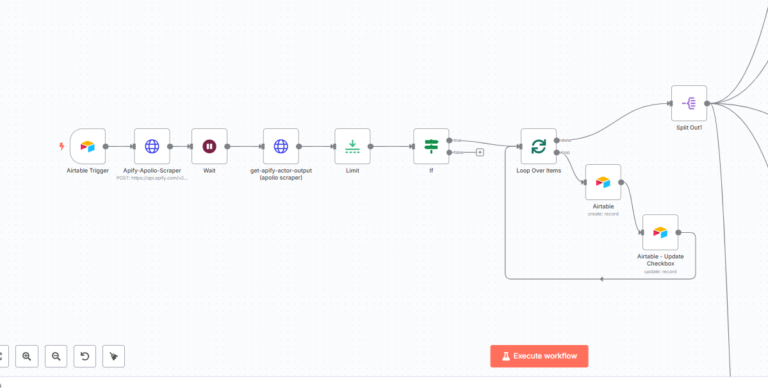
Once new records appear in Airtable, the second part of the automation is triggered. Because Airtable triggers can sometimes reprocess the same records multiple times, we added a simple but effective safeguard: a checkmark column in the table. This ensures that once a record has been processed, it won’t be triggered again.
The actual scraping is handled by Apify’s Apollo Scraper, which extracts all available lead information directly from Apollo. To make sure Apify has enough time to complete the scraping job, a Wait node is
used before the automation continues. Once the dataset is ready, the automation pulls the structured results back into Airtable.
We also added a Limit node, which is connected to both the chatbot and Airtable. This allows us to respect the maximum number of records defined in Part 1, ensuring only the specified batch size is scraped and processed.
At this stage, the enriched lead data is saved back into Airtable, neatly structured and ready for the next step in the workflow.
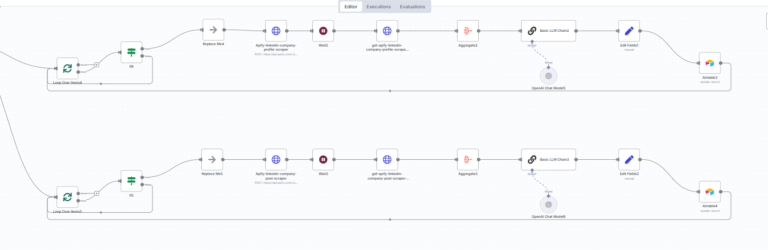
Part 3: Enriching Leads with Contextual Data
With the core lead information scraped from Apollo, the next stage focuses on gathering deeper insights about each prospect. The goal here is to collect as much relevant data as possible, which later enables highly personalized outreach.
Using a combination of AI and additional Apify scrapers, we expand the dataset beyond Apollo’s information. For this case study, we integrated tools such as Tavily and LinkedIn scrapers to pull details about both the company and the individual.
This includes:
- LinkedIn profile information
- Recent activity and posts
- Company updates
- Additional contextual signals that may reveal potential pain points or the best angle of approach
All of this enriched data is stored back into Airtable, ensuring that every lead record carries not only standard contact details but also valuable context.This creates a foundation for the final stage of automation: generating super- personalized outreach messages that feel authentic and relevant to each prospect.
Part 4: AI-Powered Lead Profiling and Scoring
Once enriched data is collected, the automation moves into AI-driven profiling.
At this stage, the system analyzes each lead in detail to create a profile that goes far beyond standard contact information.
The AI examines the prospect’s LinkedIn profile to determine what they focus on, what topics they post about, and what professional angles might resonate with them. The goal is to identify unique outreach hooks, so that when the message reaches the prospect, it feels as though we’ve genuinely read and understood their profile.
We also generate a company website summary to uncover additional talking points and strategic angles. This helps diversify the ways we can position our outreach and tailor messages to different decision-makers or contexts.
Beyond profiling, the AI also provides a lead scoring mechanism. It evaluates how well the lead fits our ideal customer profile, predicts the likelihood that they may need our service, and assigns a rating. This scoring system allows us to filter leads more effectively, focusing resources on the most promising opportunities and avoiding time spent on contacts less likely to convert.
The result is a structured, data-backed way to shift outreach strategies depending on the quality and characteristics of each lead, making campaigns both scalable and highly personal at the same time.
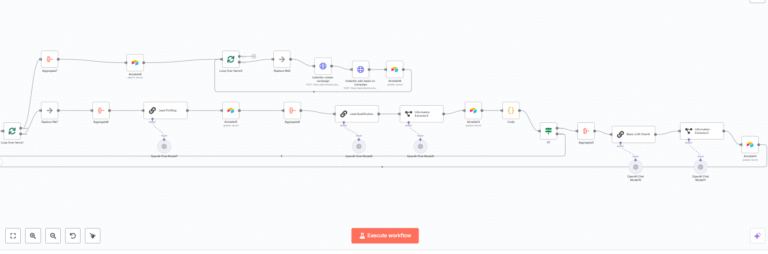
Part 5: Generating and Delivering Personalized Outreach
The final stage of the automation is where all the collected insights are transformed into highly personalized outreach messages. By drawing on enriched lead profiles and AI-driven analysis, the system produces copy that feels authentic, relevant, and tailored to each individual rather than generic mass emails.
Once generated, the messages are passed into a cold outreach platform that manages delivery, scheduling, and performance tracking. Because effective outreach requires constant testing of different angles and strategies, we designed the prompts to be easily adjustable. This flexibility allows quick changes to tone, positioning, or value propositions without needing to rebuild the entire workflow.
The result is a system that blends automation with genuine personalization, making it possible to scale outreach while still giving prospects the impression that every message was written just for them.